
Traditionally the “perfect student” was often the one with the thickest stack of flashcards and the best memory. You probably remember those days of cramming definitions of photosynthesis or historical dates just to forget almost everything the moment the finals ended. But things are changing fast in the Indian education landscape. Parents looking for a Best school in Nagpur should stay tuned to this blog.
The old-school approach of rote learning vs modern education is finally reaching a tipping point. Instead of just knowing things students are now being asked to do things. This isn’t just a minor tweak in the syllabus but a complete change of how we define intelligence in the classroom. Today, competency-based learning in CBSE is the new top benchmark. It is moving away from the memorize and repeat cycle toward actual mastery.
What Was Wrong with the Old Way?
The problem with the old school of thought was the gap between grades and reality. You could have a student getting top marks who still can’t work out percentage or putting a formal letter into words. That was the unintended side effect of traditional schooling.
In the past, the focus was almost entirely on the textbook. If it wasn’t in the chapters, it wasn’t on the test. This created a bit of a knowledge bubble. Students were experts at passing exams but felt lost when those same concepts appeared in real-life scenarios. The classic struggle of rote learning vs modern education highlights exactly this gap. Modern classrooms want to pop that bubble and let the real-world in.
Breaking Down Competency-Based Learning
The core idea behind competency-based learning is that proving you understand a skill is what drives your progress. It’s a simple shift in focus—away from the calendar and toward actual ability. A teacher won’t just flip to the next page because it’s a new month; they wait until they are sure the students can put the current concept into practice. It’s less about finishing the portion and more about mastering the material. They make sure children take their own time, which stops early misunderstandings from sticking with them throughout their years in school.
The Power of “Doing”: Hands-on Learning
You might notice that modern schools are becoming much louder and more active. That’s because experiential learning in schools is becoming the main focus. No longer are students just sitting in neat rows listening to a lecture. They are building models, conducting experiments and engaging in role-plays.
Think about a math class where instead of just solving equations on a board students go to the grocery store to understand percentages, profit and loss. That is hands-on learning in action. It’s sticky knowledge which stays with you long after the school bell rings because you didn’t just read it but you lived it.
New Rules for a New Era: CBSE Teaching Methods 2026–27
As we look toward the upcoming academic cycles, specifically the CBSE teaching methods for 2026–27 the emphasis on critical thinking is becoming even more intense. The board is actively encouraging schools to ditch the one size fits all lecture style.
The new methods prioritize:
- Case-based questions: Exams now feature stories or scenarios where students must apply logic.
- Interdisciplinary projects: Linking Science with Art or History with Geography to show how the world is connected.
- Digital Integration: Using tech not just as a gadget, but as a tool for research and creation.
This shift is a response to a world where information is available at the click of a button. Since Google knows all the facts, schools are focusing on teaching kids what to do with those facts.
- Putting the Student First: The Rise of Student-Centred Learning
For a long time, the teacher was the lecturer at the front. In the new model of student-centred learning in India, the teacher is more like a mentor nearby. This shift recognizes that every student has different strengths and interests.
In a student-centred classroom, you’ll see:
- Students choosing their own project topics.
- Group discussions where kids learn from each other.
- Self-reflection exercises where students track their own progress.
There is something very motivating about teaching kids to be responsible for their progress. This habit of self-management is one of the most important things they can take with them to college.
Finding the Right Fit: Education in Nagpur
If you are a parent looking at Schools in Nagpur, you’ve probably noticed that the conversation has changed. It’s no longer just about who has the highest toppers, but who has the best labs, the most innovative clubs and the most engaging teachers.
Choosing a Top school in Nagpur now means finding an institution that understands these global shifts. Parents are looking for environments where their children aren’t just exam robots but are becoming well-rounded individuals. Whether you are looking for a School in Wardhaman Nagar or exploring any option across the city, the focus remains the same i.e. preparation for the 21st century.
Understanding the CBSE School Curriculum
The current CBSE School Curriculum is designed to be a bridge between traditional values and modern skills. It’s a solid framework that balances academic rigor with co-curricular growth. When you look closely at the syllabus today you will find sections dedicated to Life Skills and Values Education right alongside Physics and Literature.
This all-around approach ensures that when a student graduates, they aren’t just holding a certificate but a well-equipped toolkit of skills. It’s about building character as much as it is about building a career.
The Admissions Journey in Nagpur
Thinking about a CBSE School Admission can feel overwhelming. The process has become more than just filling out a form. Many parents now visit schools to see the vibe of the classroom. They want to see if the teachers are passionate and if the students look genuinely happy to be there.
If you are currently seeking a CBSE School Admission in Nagpur, keep an eye out for how the school handles assessments. Do they only care about the final term, or do they track progress through the year? A school that values the journey as much as the destination is usually a very good bet for your child’s mental and academic health.
Frequently Asked Questions (FAQs)
Is competency-based learning harder than the old system?
Not necessarily, while it requires more thinking and less copy-pasting, most students find it more engaging because it relates to things they actually see in their daily lives.
How do teachers grade students in this new model?
Grading is more continuous. Instead of one big scary exam at the end of the year, teachers look at projects, presentations and class participation to get a full picture of what a student knows.
Does this system prepare students for competitive exams like JEE or NEET?
Actually, yes! Most competitive exams are now moving toward concept-heavy questions. By mastering the “why” early on, students are often better prepared for high-stakes testing later.
What can I do at home to support my child?
Encourage curiosity! Ask them how they would solve a problem or what they think about a news story. The more they practice thinking for themselves, the easier the schoolwork becomes.
How do I know if a school is truly modern?
Look at the walls! A modern school usually displays student work that shows original thought like drawings, essays with personal opinions and creative projects and not just identical printed sheets.
The Journey Ahead
The road from rote memorization to true competency is an exciting one. It’s a shift that treats students like thinkers, creators and problem-solvers rather than just data storage units. As education in India continues to grow, the winners will be the students who know how to adapt, how to learn and most importantly how to apply what they know/learned.
Selecting the right environment, whether it’s through a CBSE School Admission at a leading institution or simply by encouraging better study habits at home, is the first step. Let’s move toward a future where every child doesn’t just pass the test but truly understands the world, they are about to lead.
Practical Takeaway: Next time your child is studying, ask them “Can you show me how this works in real life?” If they can explain it using an example from home or the park, you’ll know they are mastering the competency, not just the words.
Research shows that students who learn through doing (hands-on learning) retain up to 75% of the information, compared to only 5% for those who just listen to a lecture. That’s a massive difference in how much value they get from an hour in class!
A Spotlight on Excellence: Centre Point School
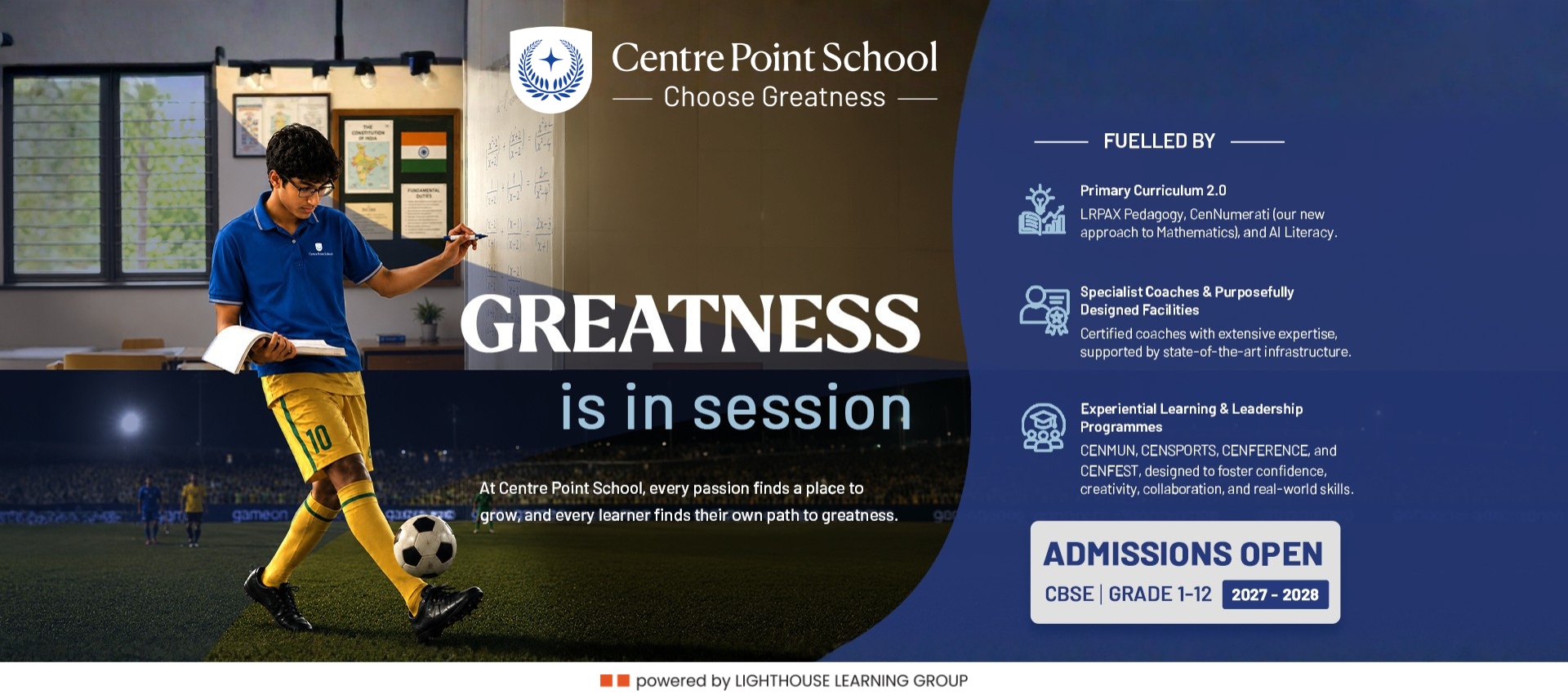
At Centre Point School, we believe that every child is an individual talent. Our approach is deeply rooted in the philosophy of moving beyond the textbook. As a leading CBSE School in Nagpur, we have combined modern teaching methods that align perfectly with the latest national standards.
In our School in Wardhaman Nagar, you won’t find students merely memorizing facts. Instead, you’ll see them debating global issues, building robotic prototypes and participating in community service. We take pride in being a space where curiosity is celebrated and where “why” is just as important as “what”. Our goal is to ensure that every student who walks through our gates leaves as a sure, kind, and capable person ready for the future.